
May 14, 2026
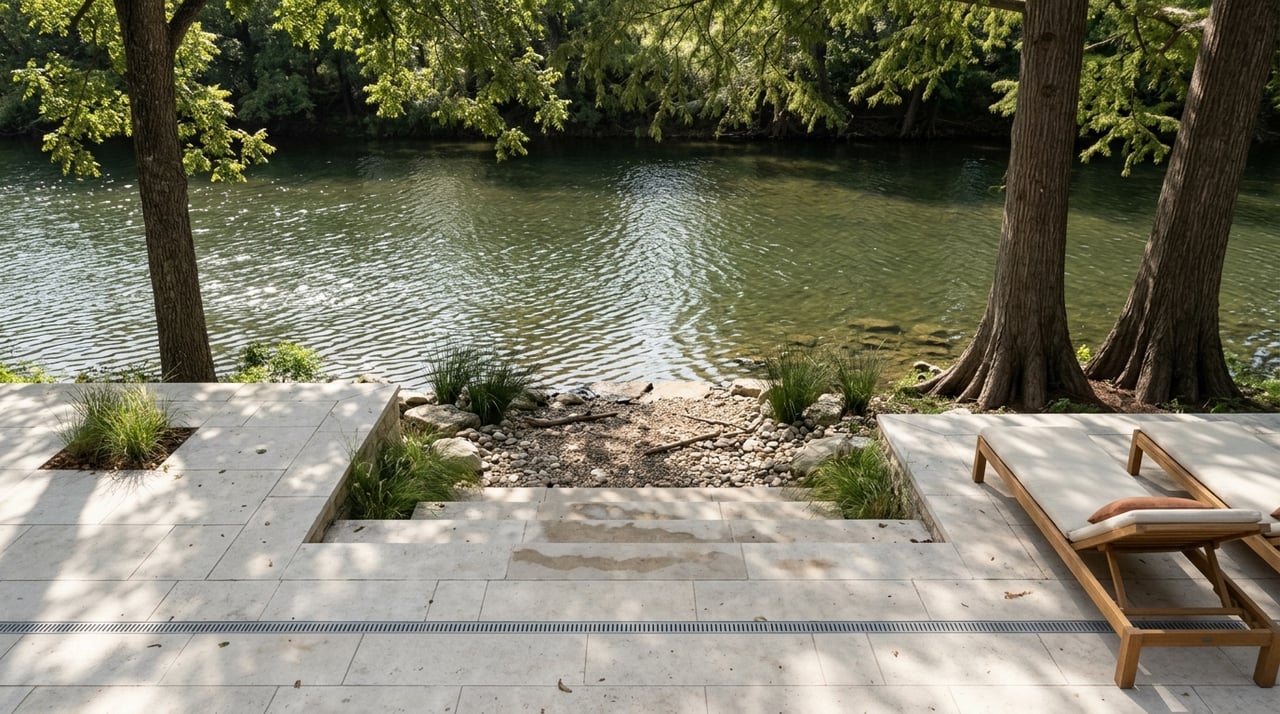
A riverfront home in Hunt can feel like the Hill Country dream. You picture cool mornings by the Guadalupe, long weekends with family, and a place that offers both privacy and beauty. But in this part of Kerr County, the river is not just a backdrop. It affects how you use the property, how you insure it, and how you evaluate the land before you buy. Let’s dive in.
Before you focus on finishes, views, or guest space, ask a simple question: how do you want to use the river? In Hunt, that answer matters more than many buyers expect.
Hunt sits where the North and South Forks of the Guadalupe meet, and the area has long been known for river-oriented retreats and vacation homes. The upper Guadalupe near Hunt is scenic and spring-fed, but Texas Parks and Wildlife describes this stretch as narrower and shallower than areas farther downstream. That means one riverfront property may be best for quiet views, while another may work better for swimming or seasonal floating.
A helpful way to narrow your search is to think in three categories:
These categories are not official labels, but they are practical ones. A property that looks ideal in photos may not match how you actually want to spend time there.
In Kerr County, current river conditions can change with rainfall, drought, and seasonal flow. The Upper Guadalupe River Authority monitors local water quality and river conditions, including gauges near Hunt on the North Fork, South Fork, and Guadalupe.
If river access is a major reason you are buying, review local conditions early. That step can help you set realistic expectations about swimability, water clarity, and how the property may feel at different times of year.
With any Hunt riverfront purchase, floodplain review should happen at the start of due diligence, not the end. This is especially important because Hunt is unincorporated, so county procedures often guide the first layer of floodplain questions.
Kerr County’s engineer administers floodplain development permits in unincorporated areas and notes that a floodplain determination or permit is required for work in the floodplain. The county also notes that much of the mapped floodplain is in Zone A, which often means there is not a detailed engineering study behind the map.
For buyers, Zone A can raise extra questions. It may be harder to estimate how flood exposure affects future improvements, repairs, or expansion plans without professional review.
That does not mean you should rule out the property. It means you should understand the risk profile, permit path, and practical limits before you commit.
FEMA defines the Special Flood Hazard Area as the 1 percent annual-chance flood zone, and mandatory flood insurance purchase rules apply there in many financed transactions. In Texas, the standard TREC contract also allows a buyer to object if any portion of the property lies in FEMA Zone A or V.
That makes flood-zone review a normal and important offer-stage question for riverfront homes. You will want to know not only the map designation, but also whether the home has a history of flooding, repairs, or flood-related claims.
Kerr County and FEMA documented the July 2 through July 4, 2025 flooding disaster in Kerr County. After that event, the county began substantial damage evaluations and flood-damage repair permitting.
For you as a buyer, that creates several smart follow-up questions:
These are not small details. They can shape insurance, lender requirements, renovation plans, and long-term ownership costs.
Many Hunt-area properties offer a rural feel, which often means utility systems deserve more scrutiny than they would in a typical in-town purchase. If you are buying a weekend retreat or second home, this step becomes even more important because small system issues can go unnoticed between visits.
Start by asking whether the home is served by a public water system or a private well. If it is on public water, the Texas Commission on Environmental Quality says public systems must test regularly for 102 contaminants and provide a Consumer Confidence Report each year by July 1.
If the property uses a private well, the responsibility shifts to the owner. TCEQ says private well owners are responsible for regular testing, and Texas A&M AgriLife recommends testing at least once a year.
If the property has a well, ask for any available records on:
A pretty setting does not tell you much about the reliability of a private water source. In a riverfront purchase, it is wise to evaluate both the lifestyle appeal and the practical system that supports daily use.
Wastewater matters just as much. TCEQ says an on-site sewage facility, or septic system, requires a permit and approved plan to construct, alter, repair, extend, or operate.
That makes septic documentation a key part of early due diligence. Ask for permits, maintenance records, pumping history, and any known repairs or modifications. A riverfront property with limited usable area, older improvements, or past flood impacts may need especially careful review.
One of the biggest mistakes buyers make is treating the shoreline as scenery rather than part of the property’s condition. On a Hunt riverfront home, the bank, drainage patterns, vegetation, and debris management can all affect how the property performs over time.
UGRA’s watershed work highlights stream stewardship, invasive plant issues, and broader creek and sediment concerns in the area. That reinforces an important point: the condition of the land at the water’s edge matters as much as the condition of the home itself.
When you tour the property, take time to study the river edge. Look for signs of erosion, unstable banks, drainage problems, or heavy debris deposits that could suggest prior high-water events.
You should also ask whether any bank stabilization work has been done and whether records exist for that work. Even a beautiful stretch of river can come with maintenance needs that are easy to miss during a casual showing.
Riverfront transactions often involve more moving parts than a standard home purchase. That is one reason title and survey review carry extra weight in Hunt.
The standard Texas contract framework through TREC includes title policy and survey provisions, and standard title exceptions often reference waters, streams, boundary discrepancies, encroachments, and overlapping improvements. The same contract gives buyers the ability to object to title or survey defects and to inspect the property during the option period.
A current survey can help answer some of the most important practical questions, including:
On a riverfront property, these details are rarely just technical. They can affect privacy, maintenance, improvements, and long-term enjoyment.
Access is another critical issue, especially if the property is part of a larger tract, older subdivision pattern, or private road network. Ask how legal access is documented and whether any shared-drive, utility, or river-related easements affect the property.
The goal is simple: make sure your understanding of the property matches what the title work and survey actually support.
If your Hunt search includes larger tracts or ranch-style holdings, ask whether mineral rights were reserved or conveyed. Texas A&M AgriLife notes that mineral rights are often separated from surface ownership in Texas.
This may not affect every riverfront retreat, but it can matter on larger acreage. It is worth clarifying early, especially if your purchase is part lifestyle property and part long-term land hold.
In Hunt, a riverfront purchase is often best approached as a coordinated review, not a simple checklist. Kerr County specifically advises buyers to hire floodplain design professionals, including an engineer and surveyor, to determine whether a permit is needed and to help handle permitting.
That local guidance says a lot. The smartest approach is usually to bring together the right professionals before your option period ends.
Depending on the property, your team may include:
This kind of coordinated due diligence can help you spot issues while you still have time to negotiate, request documents, or reconsider the purchase.
If you want a quick filter for any Hunt riverfront property, start here:
These questions can help you move past the romance of riverfront ownership and into a more confident decision.
A Hunt riverfront home can be a rare and rewarding purchase. The landscape is beautiful, the setting is distinctive, and the lifestyle appeal is real. But the strongest purchases happen when you evaluate the river, flood exposure, utility systems, and property rights together.
That is especially true in a place like Hunt, where the river is part of daily life and part of the due diligence story. When you ask the right questions early, you give yourself a much better chance of buying a retreat that fits both your vision and your long-term comfort.
If you are considering a riverfront home or land purchase in Hunt or elsewhere in the Hill Country, Marjorie Group offers an advisor-led approach built for thoughtful, detail-driven decisions.
Stay informed with market trends, tips, and community highlights across Fredericksburg and the Hill Country.


From heritage ranches to distinctive homes—we help you move with purpose.
GET IN TOUCH

ADDRESS 106 S LINCOLN ST FREDERICKSBURG TX 78624